Ban Ki-moon warns UN Security Council risks irrelevance without reform
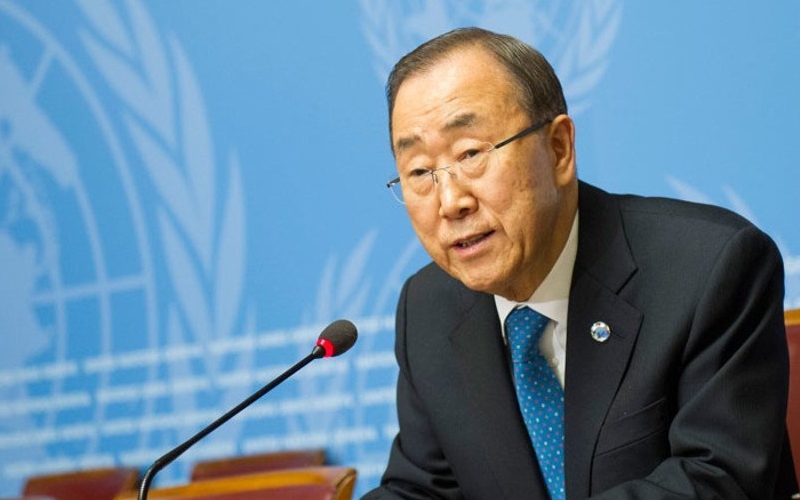
Former UN chief Ban Ki-moon warns the Security Council risks collapse or irrelevance without veto limits and a reformed, single-term Secretary-General system to restore independence and effectiveness.
Former UN Secretary-General Ban Ki-moon has urged sweeping reforms at the United Nations, warning the Security Council risks sliding into irrelevance if it fails to change how it operates and how it selects future UN leaders.
Speaking at a high-level debate, Ban argued that the current leadership system weakens the independence of the Secretary-General and leaves the organisation unable to respond effectively to growing global crises.
More To Read
- M23 rejects foreign support claims, calls for dialogue under Doha peace process
- Egypt rejects US plan for foreign control in Gaza, insists Palestinians must govern themselves
- UN’s Guterres vows to push for Palestine two-state solution, says he will ‘not shut up’
- Kenya’s Phoebe Okowa elected to serve as judge at International Court of Justice
- Reports reveal British weapons used by Sudan’s RSF to commit atrocities
- AU warns of unprecedented security threats, urges urgent global action to stabilise Africa
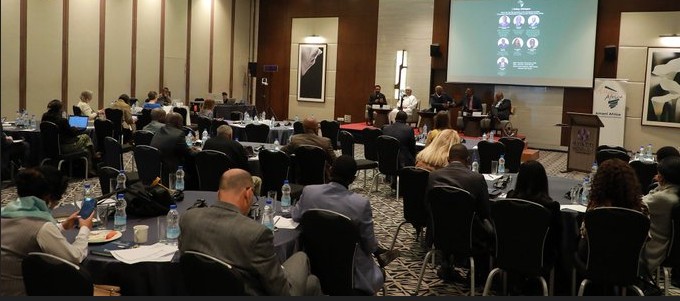
Ban made the remarks during an open debate on “Leadership for Peace”, where he and international politics scholar Anjali Dayal called on Security Council members to confront both rising global instability and internal problems that continue to limit the UN’s ability to act.
He said future Secretaries-General should serve a single, non-renewable seven-year term instead of the current two five-year terms, arguing that the existing system creates political pressure and dependency.
Reflecting on the state of the world since he left office in 2016, Ban said conditions have sharply deteriorated, marked by increasing rivalry among powerful states, declining commitment to multilateral cooperation and conflicts where civilians bear the greatest cost.
“This deeply disappointing situation is characterised by confrontation rather than cooperation among major powers,” he told the Council, pointing to the war in Ukraine, heavy civilian casualties in Gaza and weakening global cooperation, even as the climate crisis continues to worsen.
Ban said the broader global crisis cannot be separated from the failures of the Security Council itself.
He blamed repeated veto use by permanent members for paralysing the body and shielding both allies and proxies from accountability.
“The Security Council’s ongoing failure to properly function constitutes the most egregious cause,” he said, adding that vetoes have been used “to shield themselves, their allies and their proxies from accountability”.
Without serious reform, Ban warned, civilians will continue to suffer, and those responsible for abuses will escape justice. “Without it, the UN risks lurching towards either collapse or irrelevance,” he said.
Turning to the question of leadership, Ban said the process of selecting the next Secretary-General must be reformed to reduce political pressure and strengthen independence.
He said a single seven-year term would allow future leaders to act more boldly without worrying about pleasing powerful states to secure reappointment.
The current practice of serving two five-year terms, he said, leaves Secretaries-General “overly dependent on this Council’s Permanent Members for an extension,” even though the arrangement is based on tradition rather than the UN Charter.
“The General Assembly holds the power to set the terms of the appointment itself,” Ban said, urging member states to use that authority to give the next UN leader greater freedom to act.
The debate comes as preparations begin for the selection of the next Secretary-General, with the current term set to end late next year.
In November 2025, the Presidents of the General Assembly and the Security Council jointly launched the process, following a General Assembly resolution that stresses openness and wider participation.
Under the existing process, candidates are nominated by member states or groups of states and must submit a vision statement, curriculum vitae and campaign financing disclosures.
Public dialogues with candidates are broadcast, and member states are engaged throughout the process.
By mid-December, only Rafael Mariano Grossi, the head of the International Atomic Energy Agency, had been nominated, with Argentina putting forward his name.
Dayal told the Council that the next Secretary-General will take office at a time of severe strain on the UN, including a worsening funding crisis that is already cutting into the organisation’s ability to deliver basic services.
“That will result not just in shrinking this Organisation, but also in less of the work that only the UN can do at scale,” she said, citing reduced vaccination programmes, less humanitarian aid and fewer mine-clearance operations, even as global needs continue to rise.
Dayal said history shows that even during periods of deep division, the Security Council has been capable of selecting leaders who helped advance peace and cooperation.
She recalled the long deadlock before the appointment of Javier Pérez de Cuéllar in 1981 and the criticism faced by Thant Myint-U, noting that both leaders still played key roles in ending the Iran-Iraq war, resolving conflicts in Cambodia and Nicaragua, and helping defuse the Cuban Missile Crisis.
Those examples, Dayal said, highlight that the strength of a Secretary-General lies not in military or economic power but in shaping ideas, guiding dialogue and encouraging cooperation over conflict.
She described that role as the ability “to make conference rooms always more attractive than the battlefield.”
For Ban, responsibility for preserving the UN’s relevance ultimately rests with the Security Council itself.
He said curbing veto use and backing stronger, more independent leadership are essential if the organisation is to meet the challenges of the modern world.
“The path of each for themselves is no different from the path of mutual destruction,” he warned.
Top Stories Today